Free Soul Intimate Flora for Women Review: Empower Your Wellness Journey
Quick Verdict
Free Soul Intimate Flora for Women is a thoughtfully formulated probiotic supplement that targets women’s intimate and digestive health. With a robust 20 billion CFU count combined with cranberry, fenugreek, and chlorella, it caters well to those seeking to support their gut and urinary tract flora naturally. While some users find the capsules large and mention mild side effects, the majority appreciate its quick effects and overall value, making it a solid choice for women prioritising their intimate wellness.

Overview and First Impressions
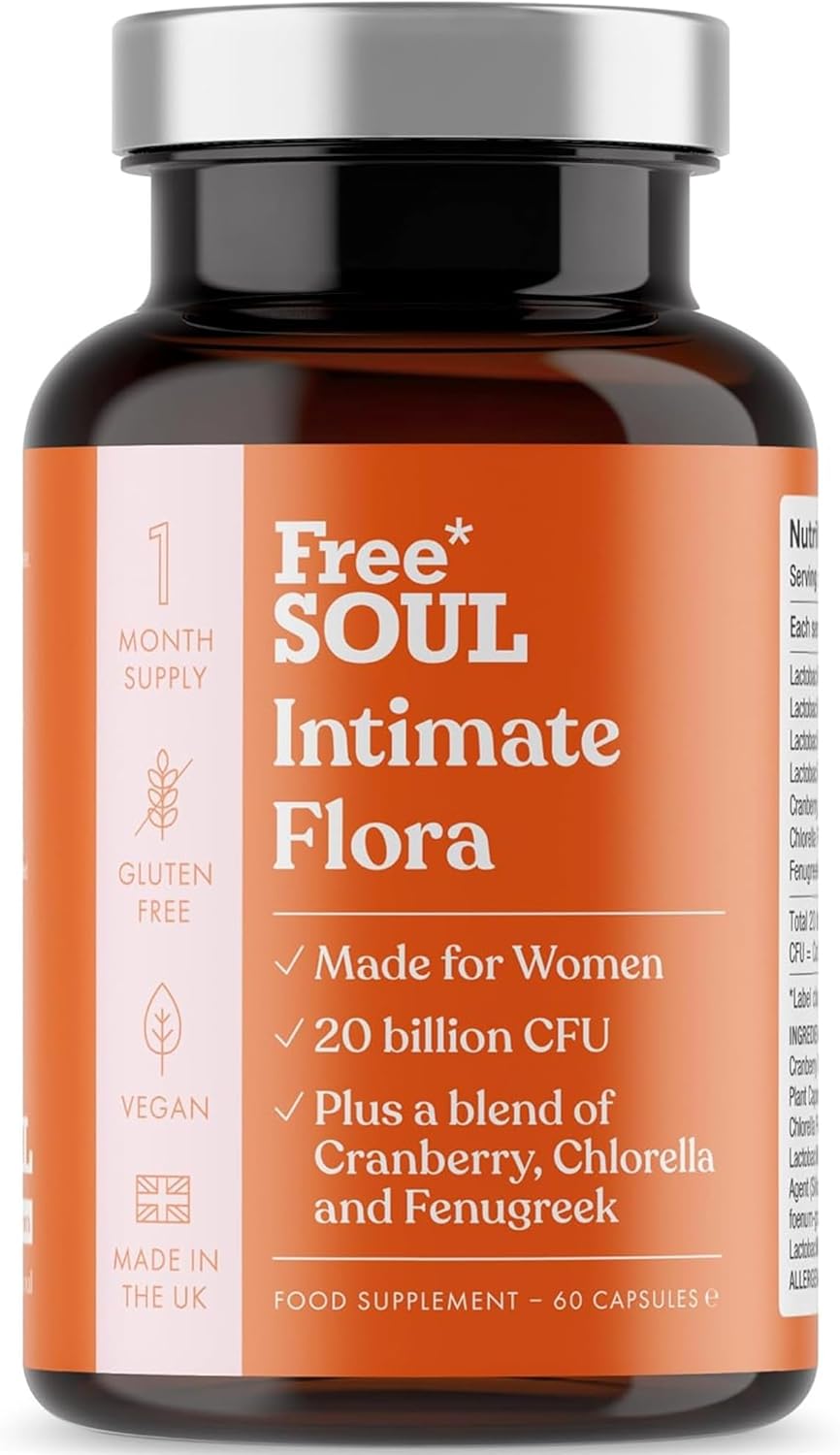
This supplement by Free Soul positions itself within the crowded UK probiotics market by focusing explicitly on women’s intimate flora, a niche but growing category appreciated for its focus on female-specific microbiome support. Packaged in a standard bottle of 60 capsules, it is designed to offer a two-month supply, which is convenient for consistent daily use.
Revitalize Your Intimate Health
The label offers clear transparency regarding ingredient quantities, listing the exact CFU count for probiotics and precise milligrams for the cranberry, fenugreek, and chlorella components. This clarity is an advantage because it allows buyers to assess potency without guesswork—a common issue with supplements hiding doses behind proprietary blends.

Capsules are a common delivery form for such supplements, and Free Soul’s capsules are vegetarian-friendly, which accommodates a broad range of dietary preferences. The capsule size elicits mixed reviews: some users find them manageable to swallow, while others find them quite large, which might be a consideration for those sensitive to capsule size.
What Is in It and Why It Matters
Key to this supplement’s appeal is its multi-pronged approach: combining live cultures with plant extracts targeting intimate and urinary tract health. Let’s break down each major ingredient and why it matters.
Probiotics – 20 Billion CFU
At the core are bio cultures delivering 20 billion colony-forming units (CFUs) per serving. The label does not specify probiotic strains, which is an important consideration. Different strains have varying survival rates through the digestive tract and differing roles in vaginal and gut microbiota maintenance. Commonly researched strains associated with intimate flora support belong to the Lactobacillus genus, especially L. rhamnosus and L. reuteri. Without strain specificity, it’s harder to determine the targeted efficacy.
However, a 20 billion CFU dose per day is a substantial quantity, exceeding typical maintenance doses (often around 1-10 billion CFUs) found in many probiotics. Such levels can potentially enhance colonisation of beneficial bacteria in the gastrointestinal and urogenital tract, a region where microbiome balance is crucial for women’s health.
Probiotics are widely linked to promoting gut health, maintaining digestive comfort, and supporting the natural defence mechanisms of intimate regions by inhibiting pathogenic bacteria colonisation. The live cultures’ survival through stomach acid and bile is always a concern; ideally, strains or delivery technologies should enhance survivability, but these details are not specified here.
Cranberry Extract – 15,000mg
Cranberry is a well-recognised botanical in women’s health supplements, particularly associated with urinary tract support. The 15,000mg quantity is notably high compared to many cranberry supplements, which typically range between 500mg and 1500mg per dose. However, it’s important to clarify whether this figure represents pure cranberry extract or a powdered whole fruit equivalent as total extract strength affects potency.
Cranberry contains proanthocyanidins (PACs), compounds credited in nutritional science with helping prevent adhesion of certain bacteria like E. coli to the urinary tract lining. This is why cranberry is commonly recommended for supporting the urinary system.
Its inclusion alongside probiotics is synergistic: while probiotics work to maintain healthy flora, cranberry’s PACs act as a deterrent against bacterial colonisation, potentially providing a dual action in intimate health support. This combination reflects a good understanding of women’s microbiome and urinary tract ecology.
Fenugreek
Fenugreek is an herbal extract traditionally aimed at hormonal balance, digestion, and lactation support. Its inclusion here is interesting because it is not a classic intimate flora ingredient but may contribute indirectly through anti-inflammatory effects and assisting metabolic regulation.
Fenugreek’s bioactive compounds include saponins and fibre, which can aid gut function and possibly influence oestrogen metabolism. However, clinical evidence linking fenugreek directly to intimate flora balance is limited. Dosage details are not clearly stated, which makes it difficult to evaluate its practical impact in this formula.
Chlorella
Chlorella is a nutrient-dense algae known for its antioxidant properties, rich in vitamins, minerals, and chlorophyll. Its presence suggests an intention to support overall detoxification and immune function alongside the probiotic and herbal components.
By contributing antioxidants, chlorella may help mitigate oxidative stress in mucosal tissue, supporting a healthy environment for beneficial microbes to thrive. Its exact dose is not disclosed, but typical effective doses in supplements range between 500mg to 3000mg daily. Without specifics, efficacy assumptions remain cautious.
Synergistic Considerations and Interactions
The formula smartly combines probiotics with cranberry, which in scientific literature indicates complementary routes to maintaining intimate health: microbial balance coupled with bacterial adhesion prevention.
Fenugreek and chlorella’s roles appear supportive, aimed at strengthening systemic resilience rather than targeting intimate flora directly. This broad spectrum may appeal to women seeking holistic wellness rather than a narrow probiotic focus.
Regarding safety, cranberry in typical doses is considered safe, but it can interact with blood-thinning medication like warfarin—something users on such prescriptions should note. Fenugreek also has mild blood sugar-lowering effects, which may affect certain diabetics or those on hypoglycaemic meds. As with any supplement rich in bioactive components, consulting a healthcare professional if on medication is advisable.
What Customers Are Actually Saying
Customer feedback for Intimate Flora for Women is broadly positive, averaging a 4.4 out of 5 stars from over 2000 reviews, indicating robust satisfaction.
Discover the Power of Intimate Flora
Many users highlight noticeable benefits within days, specifically improvements in gut comfort and urinary tract wellbeing. For instance, some report significant reduction in stomach discomfort after just two days of use. This rapid feedback aligns well with high-dose probiotic effects, which often reduce bloating and digestive irregularity quickly.
The supplement’s ease of swallowing is generally praised, though a portion of users find capsules somewhat large, leading to mixed feelings on this point. Several users note good value for money and commend the product’s ingredient transparency.
On the downside, a subset of customers mention mild side effects such as nausea and headaches, particularly during initial use. Such reactions are not unusual when introducing high-dose probiotics or herbal components, as the body adjusts. Most reviews do not indicate ongoing issues, but potential users sensitive to such effects should start cautiously.
Overall, the positive experiences reported echo the known science around probiotics and cranberry—users appreciate the digestive and intimate health focus. Negative feedback is relatively small but honest about the limitations intrinsic to supplements, such as capsule size and occasional transient digestive discomfort.
Ease of Use and Daily Experience
Designed for convenient once-daily dosing, this supplement fits easily into a daily routine without requiring multiple intakes or complicated timing. Probiotics generally perform best taken with food to buffer stomach acid and enhance bacterial survivability, a strategy recommended by many manufacturers and supported by research. The packaging or accompanying leaflet does not specify precise timing, but users typically benefit from taking it alongside a meal.
Capsule taste and smell are not prominently reported as concerns, which is ideal since some probiotic capsules can have unpleasant odours or aftertastes. The absence of such reports suggests a neutral sensory profile for this product.
For women seeking a straightforward, no-fuss addition to their daily wellness regimen, Free Soul Intimate Flora offers manageable dosing paired with good ingredient transparency, making adherence easier.
Who Should Consider This
This supplement is aimed predominantly at adult women who want focused support for their digestive and intimate health. It particularly suits those who experience occasional digestive discomfort, want to proactively support urinary tract flora, or are interested in maintaining balanced microbial populations pertinent to women’s health.
Vegans and vegetarians will appreciate the capsule’s vegetarian composition. Mature women dealing with hormonal changes that impact microbiome balance might also find the fenugreek inclusion relevant, though evidence is indirect.
However, this product is less suited for those who may have difficulty swallowing larger capsules or who are on blood thinners or hypoglycaemic medication without medical advice. Anyone with sensitivities to probiotic supplementation or herbal ingredients should proceed cautiously.
Further detailed reviews and comparisons are available on specialist UK nutrition sites for readers wanting deeper insights into women’s probiotic options.
Compared with similar priced models, Free Soul’s formula stands out for its high-dose cranberry content paired with a robust 20 billion CFU probiotic count—few women’s intimate flora supplements offer this combination at once, making it distinctive.
Pros and Cons
Pros:
- High-dose 20 billion CFU probiotics exceeding typical maintenance levels
- Large 15,000mg cranberry content providing strong botanical support
- Clear, fully disclosed ingredient dosages without proprietary blends
- Generally positive customer feedback with rapid reports of digestive relief
- Vegetarian capsules suitable for a wide range of diets
Cons:
- Capsule size may be difficult to swallow for some users
- Lack of strain-specific probiotic disclosure limits detailed efficacy assessment
- Fenugreek and chlorella amounts unspecified, making their impact uncertain
- Some users report transient side effects like nausea and headaches
Final Verdict and Recommendation
Free Soul Intimate Flora for Women emerges as a well-rounded supplement combining substantial probiotic cultures with potent cranberry and supportive botanicals. The transparency of dosing and the synergy between probiotics and cranberry offer real value for women seeking digestive and intimate health support within one formulation.
While the absence of specific probiotic strains and some variability in capsule size may deter a few, the overall positive customer sentiment and scientific rationale behind the ingredients make it a worthy consideration. For women looking to empower their wellness journey with a targeted blend that supports both gut and intimate flora, this supplement fits the bill comfortably.
To explore current availability and check the latest user ratings, visiting Amazon’s listing for Free Soul Intimate Flora for Women is an excellent next step.
Shop Now for Women’s Wellness Boost
As an Amazon Associate, I earn from qualifying purchases.
The content on VitaminsForAdults.co.uk is provided for general informational and educational purposes only and does not constitute medical advice, diagnosis, or treatment. We are not medical professionals, doctors, pharmacists, or healthcare providers.